
RustGrid backend security layers: RBAC, scoped access, and one workflow core
Teams do not adopt workflow infrastructure because they want another product to babysit.
They adopt it because tickets, approvals, incidents, ideas, escalations, and agent actions need a durable backend. That backend has to be safe enough for production systems, flexible enough for custom interfaces, and boring enough that teams can stop assembling the same security layers in five different places.
That is the backend shape RustGrid is built around.
Security Belongs In The Workflow Core
When teams build workflow into a product, security often starts as a local concern. The support queue checks one role. The public roadmap checks another. An automation worker gets a long-lived secret. A webhook handler writes directly to a table. An internal console has its own admin rules.
Each piece is understandable. Together, they become a policy maze.
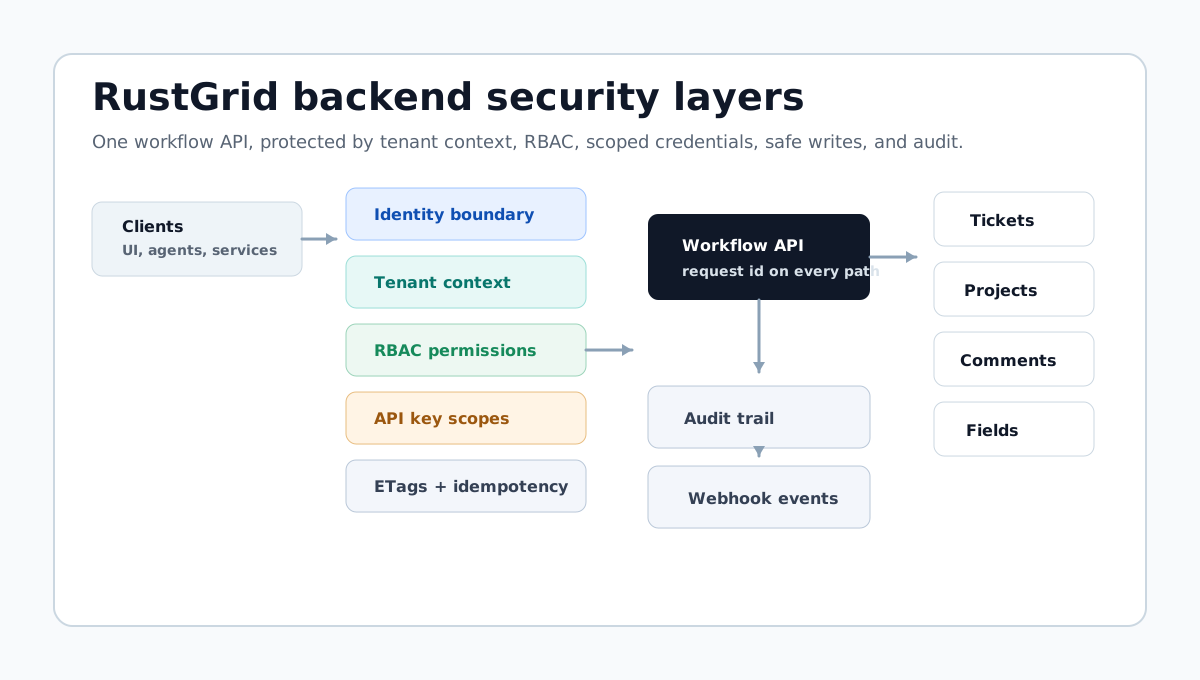
RustGrid takes the opposite approach: the backend owns the security contract for workflow state. Clients can be different, but the enforcement path is shared. A board, customer portal, agent runner, admin console, and backend worker all talk to the same API layer.
That gives adopters a single place to reason about:
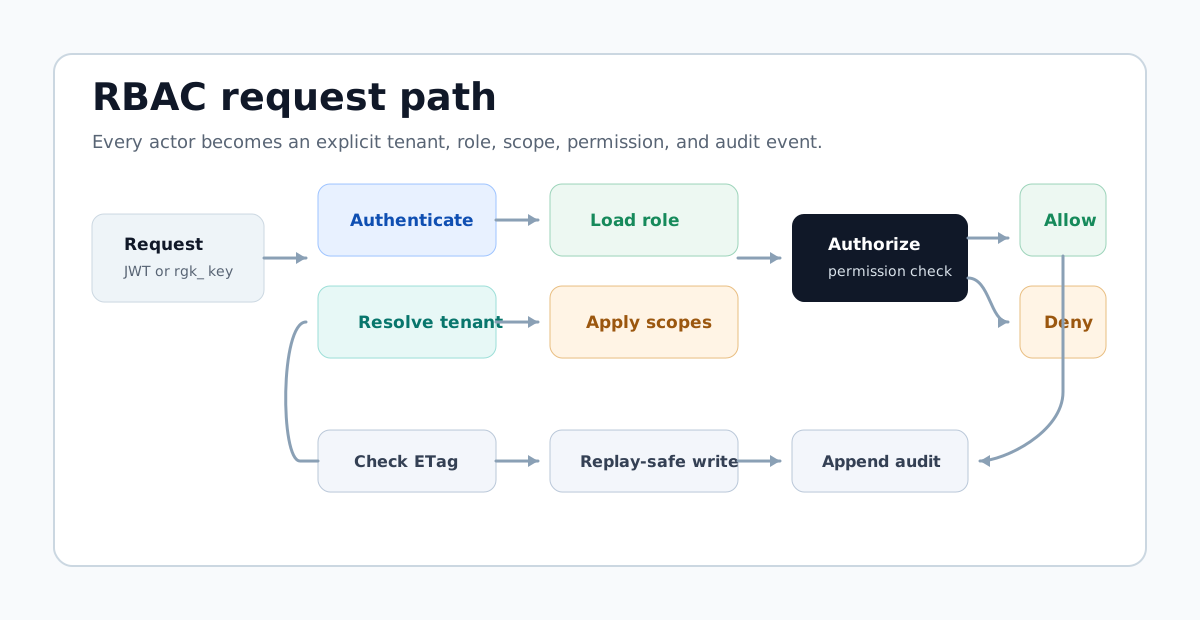
- who the actor is
- which tenant the actor belongs to
- which role and permissions apply
- which API key scopes are allowed
- whether a write is stale or replayed
- which audit event records the change
- which downstream systems should be notified
The result is not just “tickets with auth.” It is workflow state with security built into the backend primitive.
Tenant Context First
The first security layer is tenant context.
RustGrid uses tenant-scoped credentials for user traffic and API-key automation. The tenant is derived from the authenticated context instead of trusted from a loose request header. That matters because workflow products are almost always multi-tenant: the same endpoint can list tickets, update members, create projects, or deliver events for many organizations.
If tenant selection is treated as a client hint, every route has to remember to distrust it. If tenant context is derived from credentials, the backend starts from a stronger default: the request is already operating inside a specific workspace boundary.
This is the layer adopters should not have to rebuild for every custom surface.
RBAC For Humans And Systems
RBAC is where workflow security becomes practical.
In RustGrid, a user operates with an effective role and permission set inside the active tenant. That lets teams express product rules as permissions rather than one-off checks hidden in interface code. Reading tickets, creating tickets, managing project members, editing API key scopes, viewing audit, and changing tenant settings are different actions. They should not collapse into one vague “admin” switch.
RBAC also helps when the actor is not a person.
AI agents, integration workers, support bots, and backend jobs need constrained authority. They may need to create tickets but not manage billing. They may need to update workflow status but not edit tenant members. They may need to read project context without seeing organization-wide audit.
The point is not to make every permission model elaborate. The point is to make the default model explicit enough that adopters can give each actor only the access it needs.
Scoped API Keys For Automation
Automation should not borrow a human session.
RustGrid API keys use the rgk_ prefix and carry server-side scopes. The important part is server-side: scopes can be managed without pretending the secret itself is the source of policy. A key can be created for a worker, limited to the actions that worker needs, rotated when necessary, and revoked when the integration changes.
That gives adopters a cleaner split:
- user sessions for humans
- scoped API keys for services
- project or tenant boundaries for where the key can operate
- audit and request IDs for supportability
This is one of the places where a single product matters. Without first-class API keys, teams usually create a patchwork of shared accounts, environment secrets, proxy services, and undocumented conventions.
Safe Writes Are Security Too
Security is not only about access. It is also about correctness under pressure.
Workflow systems are full of retries, race conditions, duplicated events, and parallel actors. A webhook retries after a timeout. An agent submits the same action twice. A human changes a ticket while an automation is updating it. A queue worker crashes after sending a request but before recording success.
RustGrid treats this as part of the backend contract:
- idempotency keys make retried mutations replay-safe
- strong ETags and
If-Matchprotect updates from stale writes where concurrency matters - request IDs give support and audit a shared correlation point
- audit history records what changed and which actor caused it
- webhooks let downstream systems react without polling or scraping state
These layers keep workflow state trustworthy when humans, systems, and agents all touch it.
Why This Lets Adopters Focus On One Product
The alternative is familiar: a PM tool for boards, a custom table for product feedback, a support queue in another app, an internal admin console, ad hoc API keys, a separate audit log, webhook glue, and scripts that try to keep everything synchronized.
That can work for a while. It also means every surface has to rediscover the same security decisions.
RustGrid is designed so adopters can center those decisions in one workflow backend. Tickets, projects, comments, custom fields, members, roles, scoped API keys, safe writes, audit, and webhooks are part of the same product boundary.
That does not remove the need to design good interfaces. It makes those interfaces easier to trust.
A customer portal can expose the slice of workflow customers should see. An operator console can show dense triage queues. An agent can classify, comment, and move work through a narrow permission set. A backend service can create work when the signal happens. They can all share one source of truth.
The promise is simple: stop rebuilding workflow security around every surface.
Use one backend that already treats workflow as infrastructure.